Add a Heading (3)
Previous
Next

View on JVSTV

JVSTV: An Introduction

Jharkhand Legislative Assembly T.V. (JVSTV) commences direct transmission of the proceedings of the House, direct transmission of Parliamentary Knowledge and factual presentation of science and communal subjects, in order to comply with the prescribed process on the lines of Lok Sabha and Rajya Sabha T.V. (JVSTV) dated 05/03/2021.

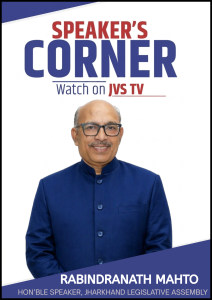
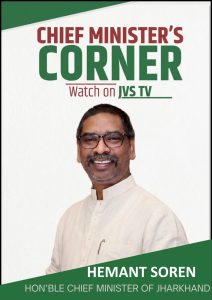
by Hon’ble Chairman, Jharkhand Legislative Assembly, Shri Rabindra Nath Mahato Under the guidance of G, Mr. Hemant Soren, The duly inaugurated by Hon’ble Chief Minister, Government of Jharkhand on 23/03/2021 on 23/03/2021.

The Dignity, meaningfulness, transparency, credibility of the highest legislative institution of the state and the continuation of its operations/process for the smooth presentation of the proceedings for the commons. General Purpose Committee On behalf of Hon’ble Chairman, Jharkhand Legislative Assembly has been authorized.

Press Release

The 68th Commonwealth Parliamentary Conference is held from October 05 to October 12, 2025 in the Bridgetown of Barbados.

In the final workshop of the Plenary session

Hon'ble Chairman Jharkhand Assembly

Shri Rabindranath Mahto "National Parliament vs. Provincial, Regional and Decentralized Legislation – Protecting and Preserving the Separation of Power"

The Barbados on the subject said that while keeping its statement in view of diplomats from different countries in Establishment,

The power must always be controlled by accountability and moral order. Montesque later implied already in the ancient scriptures of India in its principle of separation of powers: that stability occurs only when the authority is divided and harmonious, and not concentrated.

Dr. B. R. Ambedkar, the leading manufacturer of our Constitution, explained this balance with remarkable clarity. "The basic principle of federalism is that the legislative and executive authority is divided between the Centre and the States, not by any law created by the Centre but by the Constitution," he said. This scheme not only protects national unity, but also nurtures provincial autonomy, ensuring that democracy in India is as diverse as it serves people.

National parliaments and provincial assemblies are not rivals for supremeity; they are complementary pillars of democracy. Each has its own mandate, but they together ensure that people’s voice is heard at every level of governance.

The real strength of democracy is not in how much power an institution has, but it is how responsibly he prevents himself from overexclusion.

As the Chairman of the Jharkhand Legislative Assembly in India, I have seen how this balance empowers people. In a diverse country like us, the farmer’s voice in a remote village, the aspirations of youth in an industrial city and the concerns of indigenous communities in our forests should be found in the legislative process. It is possible only if national and provincial assemblies complement each other—provincial assemblies nurturing parliaments and local identity and aspirations that protect national unity.

So let us leave this conference with a new resolution.

Let us be committed to maintaining the purity of our institutions, respecting the constitutional boundaries and protecting the principle of separation of powers.

By doing so, we are not only defending legal principles; We are securing the foundation of freedom and democracy for coming generations.

Hon'ble of the Rajya Sabha in this session

The Vice-Chairperson Shri Harivansh, attending the conference from Jharkhand, Shri Naveen Jaiswal and Parliamentarians from Australia and Canada were also attended with Hon’ble President Mahodaya.

11 Oct 2025

The 68th Commonwealth Parliamentary Conference is held from October 05 to October 12, 2025 in the Bridgetown of Barbados.
In the final workshop of the Plenary session
Hon'ble Chairman Jharkhand Assembly
Shri Rabindranath Mahto "National Parliament vs. Provincial, Regional and Decentralized Legislation – Protecting and Preserving the Separation of Power"
The Barbados on the subject said that while keeping its statement in view of diplomats from different countries in Establishment,
The power must always be controlled by accountability and moral order. Montesque later implied already in the ancient scriptures of India in its principle of separation of powers: that stability occurs only when the authority is divided and harmonious, and not concentrated.

Dr. B. R. Ambedkar, the leading manufacturer of our Constitution, explained this balance with remarkable clarity. "The basic principle of federalism is that the legislative and executive authority is divided between the Centre and the States, not by any law created by the Centre but by the Constitution," he said. This scheme not only protects national unity, but also nurtures provincial autonomy, ensuring that democracy in India is as diverse as it serves people.

National parliaments and provincial assemblies are not rivals for supremeity; they are complementary pillars of democracy. Each has its own mandate, but they together ensure that people’s voice is heard at every level of governance.
The real strength of democracy is not in how much power an institution has, but it is how responsibly he prevents himself from overexclusion.

As the Chairman of the Jharkhand Legislative Assembly in India, I have seen how this balance empowers people. In a diverse country like us, the farmer’s voice in a remote village, the aspirations of youth in an industrial city and the concerns of indigenous communities in our forests should be found in the legislative process. It is possible only if national and provincial assemblies complement each other—provincial assemblies nurturing parliaments and local identity and aspirations that protect national unity.

So let us leave this conference with a new resolution.
Let us be committed to maintaining the purity of our institutions, respecting the constitutional boundaries and protecting the principle of separation of powers.
By doing so, we are not only defending legal principles; We are securing the foundation of freedom and democracy for coming generations.
Hon'ble of the Rajya Sabha in this session
The Vice-Chairperson Shri Harivansh, attending the conference from Jharkhand, Shri Naveen Jaiswal and Parliamentarians from Australia and Canada were also attended with Hon’ble President Mahodaya.

08 Oct 2025

The workshop on the art subject of living a better life of up to 12.30 pm on 18 September at the Jharkhand Legislative Assembly.
This workshop was organized by Motivational Speaker Arun Sage Heavenly.
Shri Rabindranath Mahto, Hon'ble Chairman in the workshop, Shri Irfan Ansari, Hon'ble Member Shri Ramchandra Singh and Officer/Employee of the Audit Secretariat along with Secretary Shri Manik Lal Hempham Singh in charge of Jharkhand Assembly.
In this workshop, Motivational Speaker Arun Rishi Laviny told how to consume or discard various kinds of items, foods and beverages used daily so that life can be rejuvenated.
Give your presentation on this topic.
They also have a specific approach on the daily routine of people in society.
Measures how large large diseases can be kept away from the body by improving small habits.
They informed that they are 72-year-old young people who did not paste tooth brush tooth over 45 years. Tea is not enough. Shaving cream is not applied soap shampoos.
Pan Gutkha cigarettes are never touched with alcohol.The food is done once a day.
And this is why in the last 45 years there is never sick. He also said that I am a wonderful man Arun Rishi "Sclassic" who has held over 2700 workshops on the art of living better life in the past 27 years.
In this event, he said that my health mantra is a drug Nirali Pandrah slapping seconds.
In this workshop, Shri Rabindranath Mahato and Hon’ble Minister of Health Shri Irfan Ansari also launched his book "How Made My India Great".

18 Oct 2025

Ranjeet Kamlesh Kumar Dixit, who was working on the post of Deputy Secretary in the Jharkhand Assembly Secretariat, died on 17 September late. Their part of the body was brought to the Thursday, Jharkhand. Where other members including Jharkhand Assembly Chairperson Rabindranath Mahto, the office bearer of the assembly and the staff gave the final darshan and tribute. The Secretary in charge of the Assembly on the spot was addressed by the officers of the Manik Lal Hebram and the Assembly Secretariat. Secretary Mr. Manik Lal Hembrum said in his mourning message that Kamlesh Kumar Dixit’s character, pilgrimage behavior and work efficiency
For the House Secretariat family will always remember them. God give His virtue to the soul in His shrines. Provide self-healing of suffering from family members.
All in the assembly complex on the spot prayed for peace of their soul by keeping silence. According to the information the late Kamlesh Kumar Dixit was born on nine February 1971 in Begusarai, Bihar
had happened. He launched his service in Bihar Assembly on a September 1998 on the post of IV Clerk category. He had contributed to the Jharkhand assembly during the cadre division after becoming separate Jharkhand state. The devotees were involved in Saru Rai, Member Ramchandra Singh, Member Raj Sinha and other Officers of the Assembly.

18 Sept 2025

NEWS BOX

Programmes on Jvstv

Social Media Feed